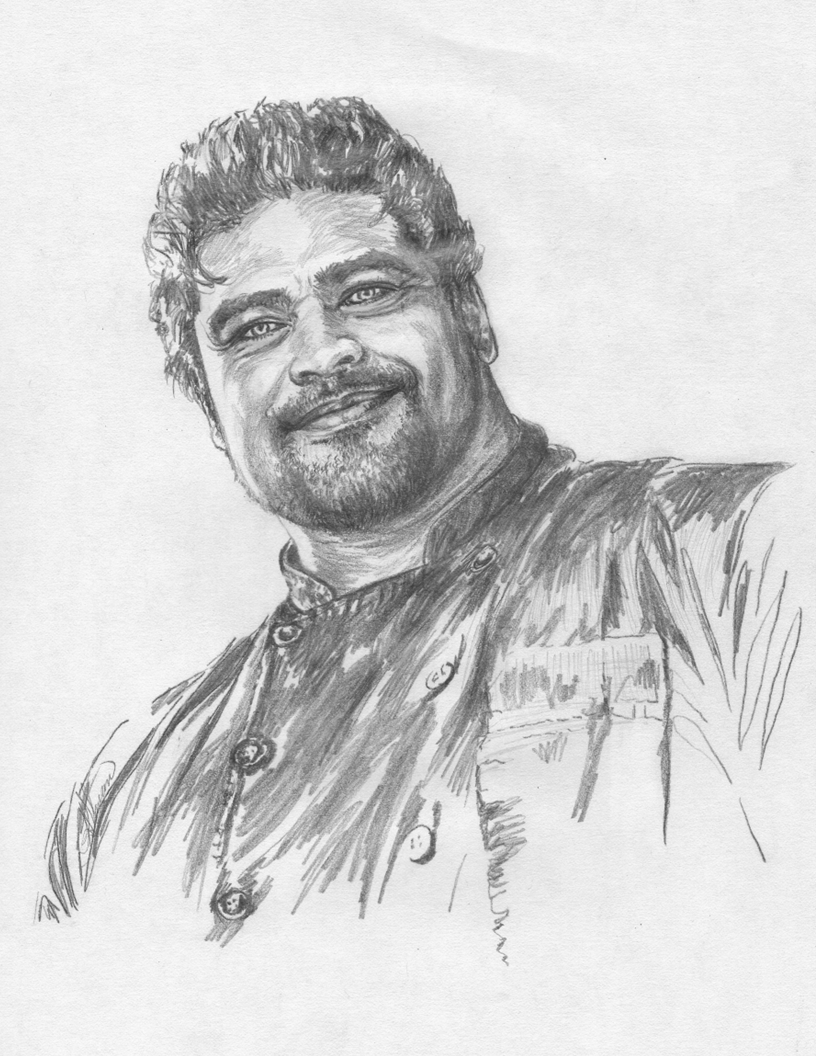
When sketching my concepts for my characters in The Admiral Inn, I actually questioned whether to clean up the smudges, or worry about the crease in the paper. Afterall, AI could make those drawings in seconds and without flaws. Now, I’m fast, but not that fast.
In Art school, my drawing instructors were merciless. A crease, a tear, a smudge, or an eraser bruise were considered failures of execution and executable offenses. When you created a flawless piece, it was evidence of skill. Now, it’s suspected of being AI. In a world of machine, not only do I struggle to produce authenticity, but I have to prove it as well. In art, in music, in writing, and even in business.
As an AirBnb host for several years with thousands of guests, I pretty quickly clocked the review process as hokum. I was a top tier super host with hundreds of written reviews. I saw first hand how the reputation systems worked. Ratings became currency and with that, favors and incentives began to shape reviews and corrupt the system.
When I began to publish books, I refused to buy followers, pay for reviews, purchase mailing lists, or engage in growth schemes. Not because I’m some babe in the woods, but because I’ve seen reputations engineered and by the very system designed to keep people “honest.” As with regulatory capture, the ones in charge of system fairness were the setting up games inside their own algorithms.
This isn’t sour grapes. My rooms were full, I made money, I had a blast meeting people from all over the world, and used my experiences to write The Admiral Inn series. BTW, I just finished drafting the last book, #12 and sent it to editing. Back to hosting, it only took me about the first month to never look at the reviews again—whatever the stars. The words fell flat. Coerced, thoughtless, insincere. What does that even tell me about how well I’m performing?
Please know that the book business is no different—maybe worse—but I have experience with this system of fakery. Coerced, thoughtless, and insincere feedback is the evidence of a corrupt system. No AI required. Just greed.
Did you know followers, mailing lists, and even reviews can be purchased? I don’t swap, trade, comp, buy, sell, or manufacture the reputation of my books. Not because I can’t, but because these are short-term fixes for long-term integrity, and not one that will pay off after the first flush.
Please, read my reviews on Amazon or wherever. Those dozen or so people typed actual words because they felt an inner compulsion to do so. Some might know me, many don’t, and I appreciate them all for taking the time. I only have so many hand-picked Facebook “friends,” a few followers, fewer subscribers, and occasional likes, but they aren’t bots. That’s the world I choose to live in. Do I want 10,000 fans waiting for my next book release? Heck, yeah, but I want them earned, because if I break their trust, they won’t be there for the book after that. And, boy howdy, do I have books after that.
So how do we navigate, with any veracity, a world where AI can manufacture these reputations faster than even the previous corrupt system? Where the right AI agent could build me up to superstar stats overnight. Where the books are written in minutes. Where music cooks for seconds before two versions, fully produced, pop up like hot toast. Where artwork materializes without any do-overs (if unable to spell and prone to additional fingers).
Easy. Yes, I said it. It’s easy if you focus on the crease in the paper. I might seem to be sidling up to this notion that humanness is found in the flaws and perfection belongs to the machines. This ideal is the fodder for a century of sci-fi, having grabbed the wrong end of the stick. Humans crave the company of other humans. Even if, for some of us, doors and distance separate us most of our working life. We write about them, watch them in dramas, listen to their voices, taste their food, study their art. And not to fixate on the flaws—trolls excluded—but to hold, in our tiny hands as it drips through our correct number of fingers, little “t.” So small. So essential for life.
In the science world, big T often represents temperature in an equation, but little “t” represents time—arguably the most precious resource of our existence. But this letter isn’t simply standing in for the concept of time. It stands for the passage of time.
In the grand scale of the universe, with such infinitesimal lifespans, the passage of time fascinates us, defines us, and ultimately destroys us. Therefore, I posit that humanness isn’t contained in the flaws, but in the journey, the struggle, in the evidence that someone dedicated their time to execute the artifact, be it a painting, a song, or a book. And then, little “t” is compounded by the experiences leading up to that creation. Like, squared or something. Little “t” to conceive, study, and practice, and little “t” to make that thing real. All these experiences are contained in the artifact for us to puzzle out, ponder, learn from, and judge, but most of all, there so we can connect.
Are the tiny chisel marks on the underside of an occasional table mistakes or a signature, “I was here?” And if we examine that table, we begin to see the choices the builder made, the level of skill, the innovations, craftsmanship, and artistry. We begin to know the woodworker. In this world of deep fakes and alternative facts, proof that what we see or hear existed well before this very second gives us a sense of object permanence, which in turn, drops anchor, throws a rope over the piling, and quiets the turbulent water beneath us—if only for a moment of human time.
Once upon a time, the accidental crease in the sketch meant we started over. Even if we don’t believe we can recapture those perfect pencil strokes ever again, we start over. Perfection was once a testament to our skill, our study, our dedication, and if we failed in the next iteration, we chalked it up to an inspiration never meant to be rendered. A mythical beast. Fate.
Now, I leave the crease, the evidence of the paper’s journey, the messy life of an artist squeezing a few moments out for her heart in between news cycles, laundry, and the seventh inning stretch. After all, it’s just a digital image created from a digital photo taken with my phone of a quick graphite session while I wound down in front of the TV in the evening. Right? It isn’t fine art, right?
Maybe not, but in the world of machines, that crease is proof of life.
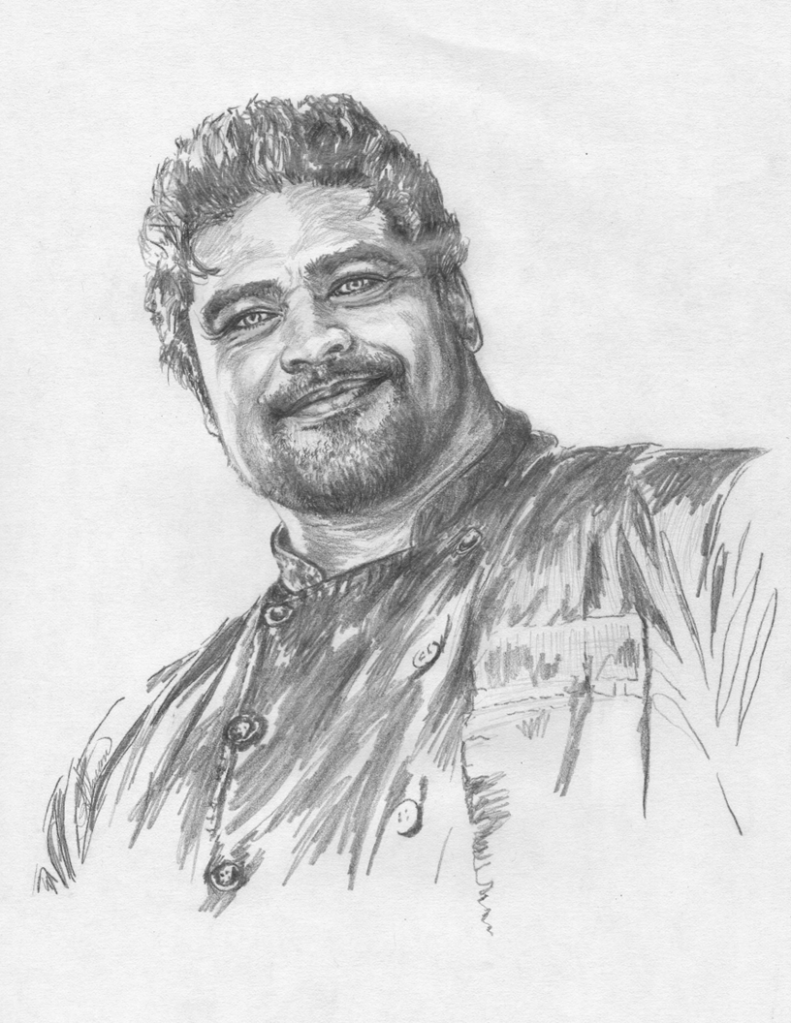
Below, the infamous crease on a quick sketch of Chef Karl from my Admiral Inn series. Book 12 is still in editing but coming along nicely. And no, I don’t intend for any flaws to slip past to prove I’m human, I have iterated manuscripts with time stamps because, well, in this day and age, I have to show my work. Like math class…with equations. Consider liking, sharing, and subscribing to my newsletters and blogs. But only if you, also, are real. 😊





Leave a Reply